
Happy Mother’s Day: Safer Screen Time for Kids, Peace of Mind for Moms

This Mother’s Day, give moms peace of mind through safer screen time for kids, supported by tools like Mobicip.
Safer screen time for kids means creating a secure, balanced, and age-appropriate digital environment where children can learn, connect, and explore without unnecessary exposure to harmful content or excessive screen use. It goes beyond simply limiting hours online — it involves guiding what children watch, setting healthy boundaries, and staying involved in their digital lives in ways that support their emotional, social, and mental well-being.
This post offers moms practical strategies for safer screen time and shows how Mobicip makes monitoring simpler, delivering peace of mind.
The Reality of Screen Time Today
A 2024 CDC report found that half of adolescents aged 12-17 in the USA had daily screen time of over 4 hours. It’s a concerning trend considering how increased screentime has often been connected to poorer mental health, irregular sleep, and affected social support. With 97% of teens ages 13 to 15 in the US today using a phone, mothers may wonder how best to protect their children without depriving them of an increasingly fundamental part of daily life.
What Safer Screen Time for Kids Actually Means
Safe screen time is ultimately not about banning screens altogether. Rather, it is about promoting a controlled, constructive use of digital devices. It’s about guiding rather than controlling.
Responsible screen time is built on 3 pillars:
- Balance: This involves incorporating effective time management into digital use. Practices such as setting screen time and app limits can help with this. Teaching one’s children to be mindful of how much time they spend on their devices and to create a rough schedule for their activities, both online and offline, could help them better compartmentalize their time.
- Safety: This involves managing the content your children consume online and ensuring they aren’t exposed to anything unsafe or age-inappropriate. It doesn’t mean micromanaging their online activity. Rather, it refers to setting boundaries on the kinds of apps and websites children might use. It refers to teaching them safe internet practices, such as not giving out their personal details to strangers, and to creating a safe environment for them to voice any trouble they may be facing.
- Awareness: This involves keeping an eye on what one’s children are using their devices for and what they do online. Again, this need not be achieved through micromanagement or underhanded methods. Open conversations and cursory screen-time reports can help moms stay updated. Keeping up with the latest online trends and issues can also help moms remain informed.
A Mom’s Practical Guide to Safer Screen Time for her Kids
Having established these fundamental tenets for safe screen time, what practical tips can mothers use in their daily lives?
Set Clear, Consistent Boundaries.
Some examples of practical boundaries that parents can set include:
- Daily screen limits. Setting daily limits on the time one’s wards spend on their devices is important. Sorting online tasks into various categories and allocating time accordingly is also useful.
- No-screen zones. Banning screens in certain situations, such as during meals or before bedtime, can help create a sense of compartmentalization. It can help provide wards with a much-needed break from the online world and encourage face-to-face bonding.
- Consistency over strictness. Instead of laying down an excess of rules for screentime, it might be more helpful to set some basic boundaries that are then consistently maintained. Rather than interrogating children on what they are doing online every second of the day, one can do things like ensure they keep to overall limits and show positive development for the time that they do spend.
Smart Tools for Safer Screen Time for Kids
Monitoring manually can get exhausting after a point. Luckily, there are a variety of smart tools available to help parents promote responsible digital use. These tools can simplify tasks such as:
- Screen time tracking
- App blocking
- Usage schedules
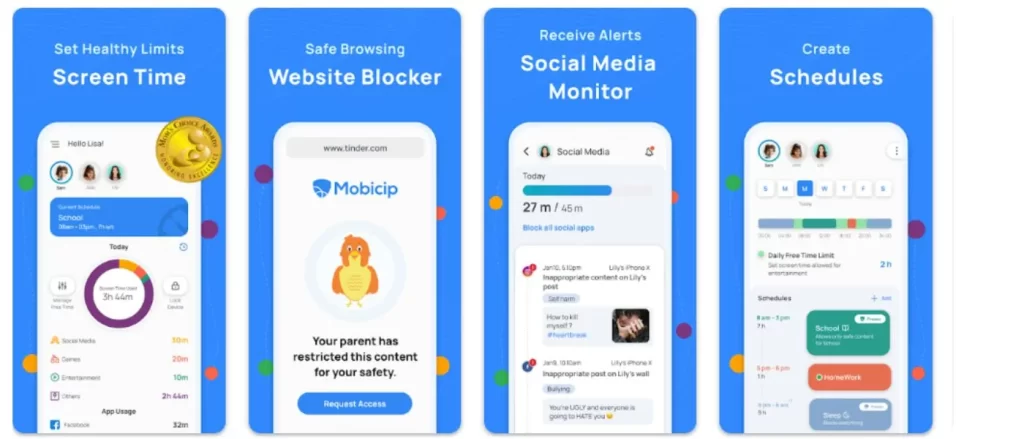
Mobicip is one such tool that can help with digital monitoring. Its features are designed to assist parents by simplifying monitoring, providing easier ways to block inappropriate content, and supporting children’s safer digital habits without resorting to outright surveillance.
Prioritizing Content Quality for Safer Screen Time
Staying mindful of what children gain online means focusing on content quality over duration. Encourage educational, meaningful content and discourage passive scrolling.
Replace, Don’t Just Remove
Any boundaries that are set must be accompanied by suitable alternatives. It is important for children not to find themselves at loose ends when they are away from their devices. The fun of offline life must be highlighted to make it more appealing. Some offline activities that can be promoted include:
- Outdoor play. Scheduling playdates with other children or signing one’s wards up for group sports can prove especially useful in this regard.
- Creative hobbies. Activities such as music, dance, art, writing, theatre, and so on can be excellent and engaging avenues for children to express themselves and have fun.
- Family activities. Organizing regular events the entire family can participate in, such as game nights, sports sessions, museum or gallery outings, sightseeing tours, etc., can be a good way to encourage offline fun and bonding.
Build Trust Through Conversations
Mothers and children can collaborate on screen time measures, fostering open conversations about online risks and teaching self-regulation. Explaining the rationale for boundaries and avoiding fear-based restrictions is key.
Positive Outcomes of Safer Screen Time for Kids
Screen time need not always be the enemy. While it is important to set reasonable limits, it is also useful to keep in mind that screen time can be a positive. Mothers can use digital tools to help their children learn and to bond with them. For example, they can watch educational or entertaining content with their children, or help them learn through apps and websites. They can also use online resources to potentially learn new skills or hobbies together.
How Mobicip Helps Moms Find That Balance
Mobicip is designed to take the pressure off daily screen-time management by turning key parenting needs into simple features. These features help moms maintain safer, structured digital environments with monitoring tools, content filters, and scheduling options, reducing the need for constant supervision.
Less Guesswork, More Clarity
Mobicip’s activity monitoring and usage reports show which apps kids use, how much time they spend in each app, and their browsing activity. This gives parents clear, real-time insights without needing to manually check devices throughout the day.
Easy Screen Time Scheduling
With screen time limits and scheduling features, parents can set daily usage caps, create device-free hours, and automatically block access during school time or bedtime. These rules run in the background, helping enforce consistency without repeated reminders.
Safer Browsing, Smarter Filtering
Mobicip’s web filtering blocks inappropriate websites and content categories, while safe search enforcement ensures more secure browsing across search engines. App blocking features also allow parents to restrict access to specific apps when needed.
This Mother’s Day, Give Moms the Gift of Peace of Mind
Parenting is already demanding, and managing screen time can feel like yet another worry.
You don’t have to do it all alone. With support and a few changes, like setting boundaries, using helpful tools, and building routines, you can ease the mental load.
Choose peace of mind by starting now: support your child’s digital well-being with practical steps and tools. Make this Mother’s Day not just about celebration, but about confidently nurturing healthy screen habits that last.
FAQ
How much screen time is safe for kids?
There isn’t a one-size-fits-all answer, but health organizations offer general guidelines. The World Health Organization recommends no screen time for children under 2 (except video calls) and no more than 1 hour per day for ages 2–5. The American Academy of Pediatrics recommends consistent limits for older children to ensure screen use doesn’t interfere with sleep, physical activity, and family time.
That said, these are starting points—not strict rules. The “right” amount depends on your child’s age, routine, and how they use screens. A child using screens for learning or creative activities may need a different approach than one primarily engaged in passive entertainment. Ultimately, what matters most is balance and how screen time fits into your family’s daily life.
What are the biggest online risks for children?
Common risks include exposure to inappropriate content, cyberbullying, excessive screen use, and contact with strangers. Even seemingly harmless apps can expose kids to unwanted content, which is why monitoring and guidance are important.
How can parents manage screen time without constant conflict?
Set clear rules early, involve children in creating those rules, and stay consistent. Using tools to automate limits can also reduce daily arguments and make expectations clear without the need for repeated reminders.
Are parental control apps really effective?
Yes, when used correctly. They help parents monitor activity, filter content, and set limits without needing to constantly check devices. The goal is to support healthier habits, not to spy on children.
How does Mobicip help with safer screen time?
Mobicip helps parents manage screen time with features such as app blocking, screen scheduling, and content filtering. It simplifies digital parenting by reducing manual monitoring and giving parents better visibility and control.