
What Is Phone Addiction in Kids and What Warning Signs Should Parents Watch For?
Phone addiction in kids refers to excessive or compulsive smartphone use that begins to interfere with sleep, schoolwork, emotional well-being, and real-life activities. Common warning signs include anxiety without the phone, excessive screen time, mood swings, sleep problems, and loss of interest in offline hobbies. Early awareness helps parents guide healthier habits.
Phone addiction in kids is becoming an increasingly common concern for parents in today’s digital world. Smartphones are now part of everyday life for children, used for communication, entertainment, and even schoolwork. But when phone use becomes constant and difficult to control, it can shift from normal behavior to unhealthy dependence.
Studies show that smartphone dependence is especially high among young people. According to data compiled by KuteSmart Kids, about 50% of teenagers say they feel addicted to their phones, spending an average of nine hours a day on their devices. Interestingly, there are still relatively few large-scale statistics specifically focused on younger children. However, a 2021 study in India found that 42.3% of children aged 5–12 years showed signs of mobile phone addiction.
In this article, we’ll look at seven warning signs of phone-addiction-in-kids that parents should watch for. Recognizing these early signals can help families step in before phone habits begin to affect sleep, schoolwork, and emotional well-being. We’ll also explore practical ways to encourage healthier digital habits and how tools like Mobicip can help parents guide their children toward more balanced screen use.

What Is Phone Addiction in Kids and Why Are Children Vulnerable?
Phone addiction develops when children rely heavily on smartphones for entertainment, social interaction, or emotional comfort. Because young brains are still developing, instant rewards from games, videos, and notifications can create strong habits. Over time, excessive phone use may affect attention span, sleep quality, and interest in offline activities.
Phone addiction is the pattern of excessive or compulsive smartphone use that begins to interfere with daily life and mental/physical health. While smartphone addiction can affect people of all ages, children are particularly vulnerable because their brains are still developing. The reward systems in the brain respond strongly to stimulation, novelty, and instant feedback, all features that smartphones provide through games, videos, and social media.
For younger children, smartphones can quickly become a source of constant entertainment and comfort. Bright visuals, fast-paced games, and endless content keep them engaged for long periods. Over time, this can make it harder for children to enjoy slower, offline activities such as reading, outdoor play, or creative hobbies. Excessive screen use may also affect attention span and sleep patterns, since children may struggle to put their devices away.
For adolescents, smartphone addiction is often driven by social factors. Teens rely heavily on phones for communication, social media interaction, and online identity. Notifications, likes, and messages trigger small bursts of dopamine in the brain, reinforcing the urge to check the phone repeatedly. This cycle can create habits where teens feel anxious, restless, or left out if they are disconnected. As a result, what begins as normal smartphone use can gradually develop into screen addiction that affects mood, sleep, relationships, and school performance.
What Are the Warning Signs of Phone Addiction in Kids?
Warning signs of phone addiction in kids include anxiety when the device is removed, excessive daily screen time, declining school focus, mood swings after use, sleep disturbances, secretive phone behavior, and reduced interest in hobbies or outdoor play. Recognizing these signs early helps prevent long-term digital dependency.
Recognizing the early signs of phone addiction in kids can help parents intervene before smartphone habits begin to affect health, school performance, or relationships. Here are seven warning signs parents should watch for.
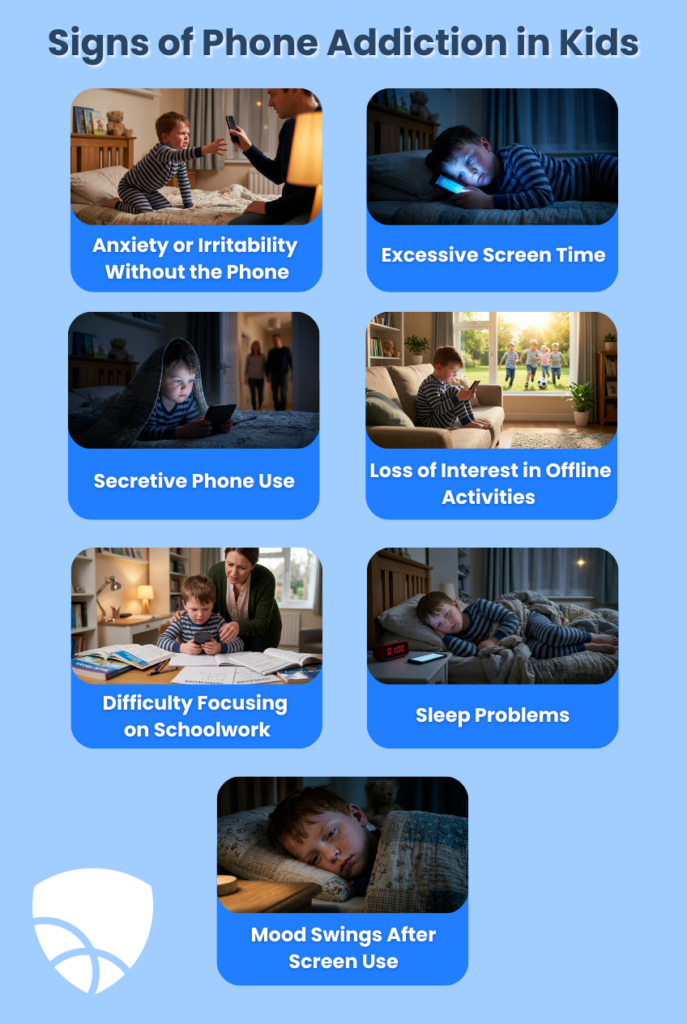
Anxiety or Irritability Without the Phone
One of the clearest signs of phone addiction is emotional distress when a child cannot access their device. If a child becomes anxious, restless, or unusually irritable when their phone is taken away, it may indicate a strong psychological dependence. Some children may constantly ask for their phone back, while others may appear bored or upset when they cannot check messages, games, or videos.
Excessive Screen Time
Spending long hours on a smartphone is another key warning sign. When children regularly choose screen time over homework, family activities, or outdoor play, it may indicate developing smartphone addiction. Excessive screen time can gradually crowd out other important activities that support physical and social development.
Secretive Phone Use
When children begin hiding their phone use, it may signal unhealthy habits. They might quickly switch screens when someone approaches, take their phone into private spaces, or insist on keeping the device with them at all times. Secretive behavior can sometimes indicate that children feel their phone use is excessive or that they want to avoid parental limits.
Loss of Interest in Offline Activities
Children who are developing screen addiction may start losing interest in hobbies they once enjoyed. Sports, reading, creative play, and spending time with friends may seem less appealing compared to the instant stimulation provided by a phone. Over time, this shift can limit opportunities for social interaction and skill development.
Difficulty Focusing on Schoolwork
Children experiencing smartphone addiction may find it difficult to concentrate on homework or classroom tasks. Constant notifications, the urge to check apps, or lingering thoughts about online activities can distract them from school responsibilities. Over time, this can affect academic performance and make it harder for children to develop sustained attention skills.
Sleep Problems
Phones can interfere with healthy sleep habits in several ways. Some children stay up late watching videos, playing games, or messaging friends. Others may wake up during the night to check notifications. The blue light from screens can also disrupt natural sleep cycles, leading to fatigue and difficulty concentrating the next day.
Mood Swings After Screen Use
Another sign of phone addiction in kids is noticeable mood changes after long periods of screen use. Children may become irritable, frustrated, or emotionally drained once they stop using their phone. Rapid emotional shifts can occur because highly stimulating content creates strong emotional engagement.
How Can Parents Prevent Phone Addiction in Kids?
Parents can help prevent phone addiction by setting clear screen-time limits, creating device-free zones, encouraging offline activities, and modeling healthy technology habits. Consistent routines and open conversations help children understand that smartphones are tools, not constant sources of entertainment or emotional comfort.
Prevention is always better than cure. Here are some practical strategies that can prevent your child from becoming addicted to mobile phones.
Model healthy phone habits
Children copy adult behavior. When parents limit their own phone use during family time and avoid constantly checking their devices, it sends a strong message about balanced technology use.
Don’t use the phone as a babysitter
It can be tempting to hand over a phone to keep a child quiet during errands or busy moments. But relying on screens to occupy children too often can encourage dependency and reduce opportunities for creativity and independent play.
Avoid using the phone as a comfort or palliative tool
Giving a phone whenever a child is upset, bored, or frustrated can teach them to rely on screens to regulate emotions. Instead, help them develop healthier coping skills such as talking, reading, drawing, or playing.
Set clear screen time limits:
Establish daily limits for phone use based on your child’s age. Consistent rules help children understand that smartphones are tools, not constant entertainment.
Create phone-free zones and times
Keep devices away from bedrooms, the dining table, and family activities. Phone-free spaces encourage better sleep and stronger family connections.
Encourage offline activities
Sports, music, crafts, reading, and outdoor play provide stimulation and satisfaction without screens, helping reduce reliance on phones.
Use parental control tools
Apps like Mobicip can help parents manage screen time, filter content, and create healthy digital boundaries, making it easier to guide children toward safer phone use.
What Should Parents Do If Their Child Is Addicted to Phones?
If a child shows signs of phone addiction, parents can gradually reduce screen time, introduce structured routines, and replace excessive phone use with engaging offline activities. Age-appropriate guidance, collaboration with teens, and consistent boundaries help children develop healthier digital habits without sudden device bans.
Addressing phone addiction in kids requires different approaches depending on the child’s age and level of independence. Younger children need firm boundaries set by parents, while older children and adolescents benefit from guidance and collaboration. The goal is to reduce phone addiction, smartphone addiction, and screen addiction while helping children develop healthier digital habits.
For Toddlers (Ages 2–4)
Today, seeing a toddler holding a smartphone is no longer unusual or shocking. However, at this age the best approach is to avoid giving a phone altogether. Toddlers do not need personal screen time, and early exposure can easily lead to patterns of screen addiction.
Instead, focus on real-world activities that support development – talking, reading picture books, building with blocks, drawing, music, or outdoor play. If a phone is used at all, it should ideally be limited to short video calls with family members, allowing toddlers to connect with grandparents or relatives who live far away. Occasional exceptions may happen, but as a general rule, toddlers should not rely on phones for entertainment or emotional comfort.
For Younger Children (Ages 5–8)
At this stage, children still need strong parental guidance because they cannot regulate phone use independently. Set clear rules about when and where phones can be used. Limiting phone access to specific times, such as after homework or during weekends, helps prevent constant use.
Keeping phones out of bedrooms, especially at night, can also prevent sleep disruption and reduce excessive screen time. Parents should also encourage alternative activities such as sports, reading, crafts, and outdoor play so that screens do not become the primary form of entertainment.
For Older Children (Ages 9–12)
Children in this age group are beginning to seek independence but still benefit from structured boundaries. Parents should explain why excessive phone use can be harmful and involve children in setting reasonable screen-time limits.
Encourage balanced routines that include homework, physical activity, hobbies, and social interaction. Device-free times, such as during meals or before bedtime, can help children develop healthier daily habits and reduce reliance on screens.
For Adolescents (Ages 13–18)
Teenagers rely heavily on smartphones for communication and social life, so completely eliminating phone use is rarely realistic. Instead, the focus should be on helping teens recognize unhealthy patterns and develop self-control.
Have open conversations about how excessive phone use affects sleep, mood, and school performance. Encourage teens to notice signs of smartphone addiction, such as constant checking of notifications or late-night scrolling. Setting shared agreements, like keeping phones out of bedrooms at night or limiting use during study time, can help teens develop healthier digital boundaries.
Using Parental Control Tools to Support Healthy Phone Use
Managing phone addiction in kids can be challenging, especially as children grow older and devices become part of everyday life. Parental control tools can help parents set healthy boundaries while still allowing children to use technology responsibly.
Apps like Mobicip allow parents to set screen-time schedules, block distracting apps during homework hours, filter inappropriate content, and monitor device activity. These tools can support families in creating balanced digital habits and preventing smartphone addiction before it becomes a serious problem.
How Mobicip Can Help
Parents often struggle to find the right balance between allowing healthy technology use and preventing phone addiction or screen addiction. This is how Mobicip can make a real difference.
Key ways Mobicip can help parents manage phone use:
- Screen time scheduling: Parents can set daily limits for device use and schedule phone-free hours. This helps ensure that children are not spending excessive time on their phones and encourages balanced routines.
- App blocking during study or sleep hours: Mobicip allows parents to block distracting apps during homework time or late at night, helping children stay focused and get better sleep.
- Content filtering: Mobicip filters inappropriate or harmful content online, creating a safer digital environment while children explore the internet.
- Activity monitoring: Parents can see which apps their children are using and how much time they spend on them. This helps identify patterns that may indicate developing phone addiction.
- Device-free family time: By setting schedules that pause phone use during meals or family activities, Mobicip helps families create regular moments away from screens.
- Gradual habit building: Rather than completely banning phones, Mobicip helps parents guide children toward healthier phone habits over time, reducing the risk of screen addiction while still allowing responsible device use.

FAQs About Phone Addiction in Kids
What are the signs of phone addiction in kids?
Common signs of phone addiction in kids include anxiety when the phone is taken away, excessive screen time, loss of interest in offline activities, sleep problems, secretive phone use, mood swings after screen use, and difficulty focusing on schoolwork.
How much phone use is too much for kids?
The amount of healthy screen time depends on a child’s age. Many experts recommend limiting recreational screen use to about 1–2 hours per day for school-age children. If phone use starts affecting sleep, school performance, or social interactions, it may be a sign of phone addiction or screen addiction.
Why are smartphones so addictive for children?
Smartphones are designed to capture attention through games, videos, notifications, and social media. These features trigger dopamine responses in the brain, making children want to check their phones repeatedly. This reward cycle can lead to smartphone addiction, especially in young users whose self-control skills are still developing.
At what age should children get their first phone?
There is no single right age, but many experts recommend delaying a personal smartphone until around age 12–14, when children are better able to understand rules and manage screen time responsibly. Before this age, shared family devices or basic phones may be better options.
How can parents prevent phone addiction in kids?
Parents can prevent phone addiction in kids by setting clear screen-time limits, creating phone-free zones such as bedrooms and dining tables, encouraging offline activities, modeling healthy phone habits, and using parental control tools to manage device use.